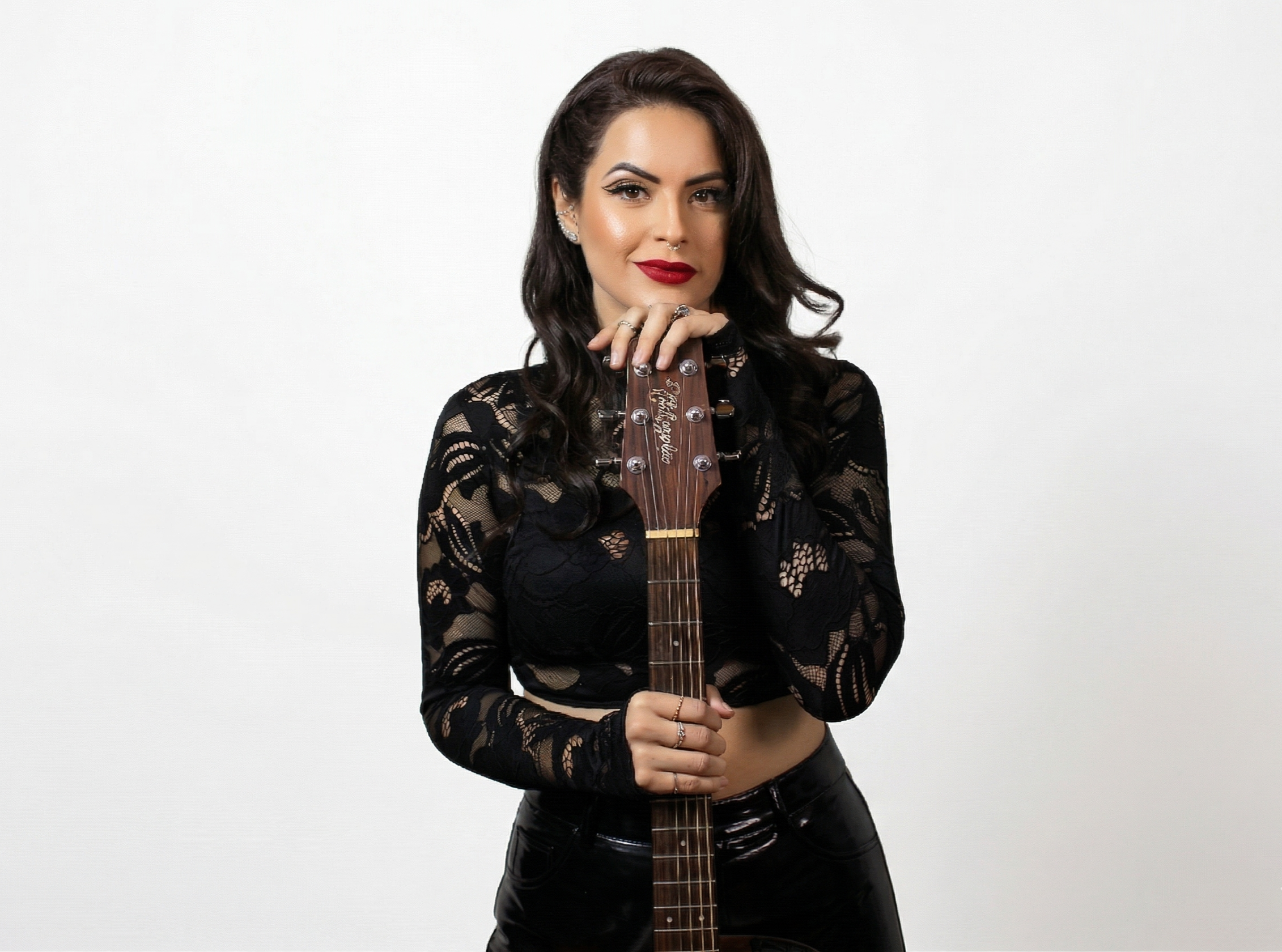
In Bauru, it all started with garage bands, putting together setlists full of our generation's emo rock and acoustic projects to play at school open mics. That's where it really began: singing lessons, guitar lessons, learning languages by singing hard songs, and discovering rock bands while we downloaded music with the wrong file names on eMule.
In 2011, now in São Carlos, I started finding my place. I began by being invited by talented musicians for small guest appearances, and later joined bands for good — Hell Dolls, Blackship, and the traditional Doce Veneno, whose 50 years of experience gave me a crash course in what awaited me out there.
But now it was up to me: in 2017, Amanda Vergara was ready to step on stage alone for the first time, just voice and guitar, taking on the challenge of turning a love into a life's project.
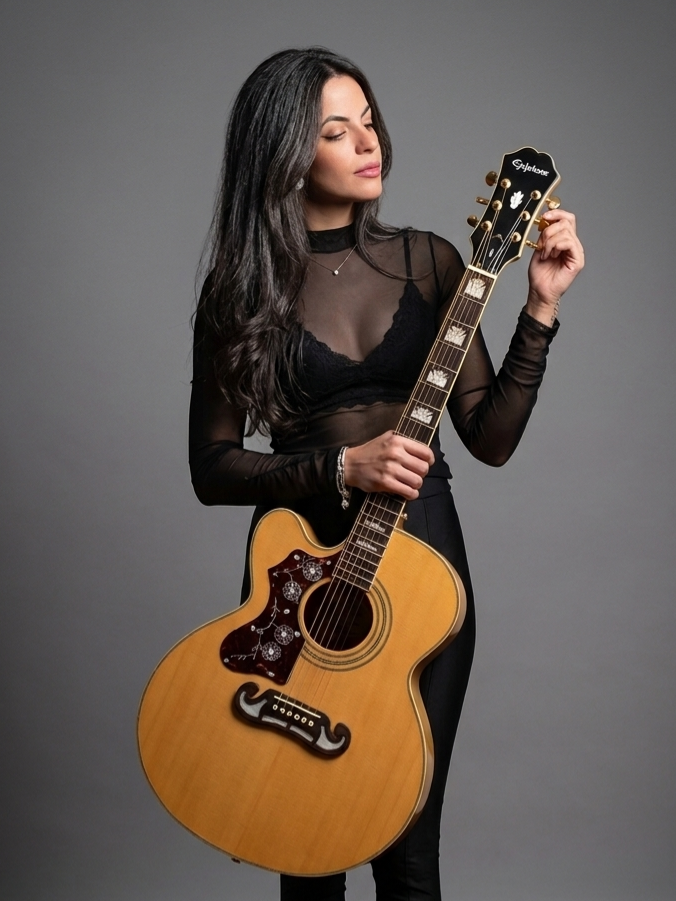
In 2020, I recorded my original single “Das Seis” at Timbu Estúdio. It was an incredible experience: my first time in a studio singing something I wrote and playing something I composed. That day, I heard something I still keep on a post-it note today: emotion and commitment matter far more. In art, truth always comes before perfection.
After that, I was invited by Green View Estúdio for a live session: recorded in a single take, playing and singing live, with no elaborate arrangements or fancy post-processing. That's how I recorded “Tarde Gris,” in Spanish, and “42,” in English — both my own compositions. Today, all three original tracks are available and distributed via ONErpm on every streaming platform.
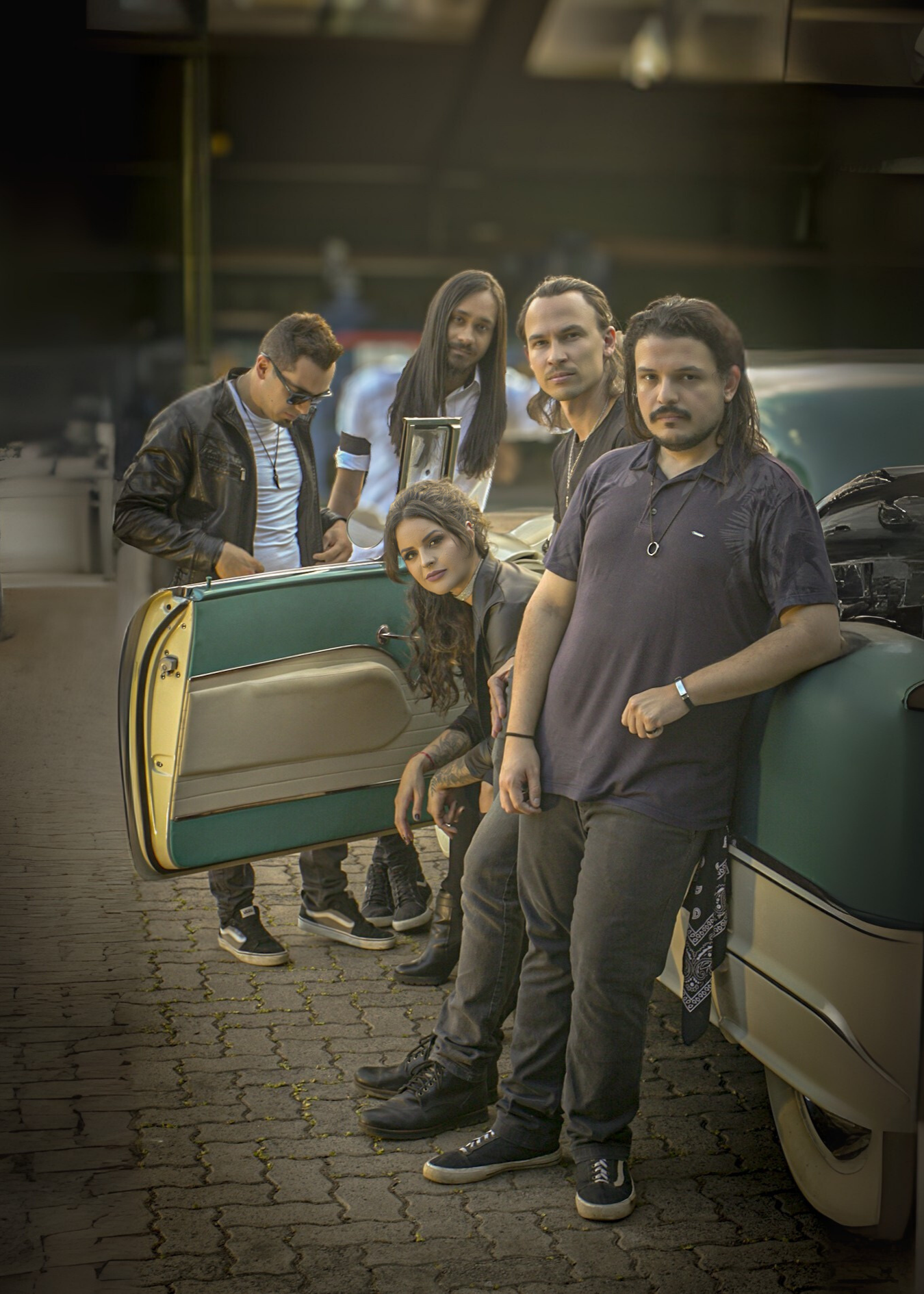
Vergara came together in 2020 and opened up incredible paths for us. Sharing the road with friends meant learning together what to do (and what not to do) at every show: we celebrated life at countless birthday parties, sang about love at many weddings, and filled pubs in and out of the state of São Paulo, reviving the Guitar Hero classics of our teenage years.
Along the way, we created one of our most special projects, which reached municipal events, cultural grants, SESC and SESI stages, and festivals across the region: Divas do Rock e Pop Rock. More than a show, the project was born out of a desire to put women's talent front and center and show: “You know that thing you love and consume? It was produced, written and performed by women.” Representation should be lived, not treated as an exception.
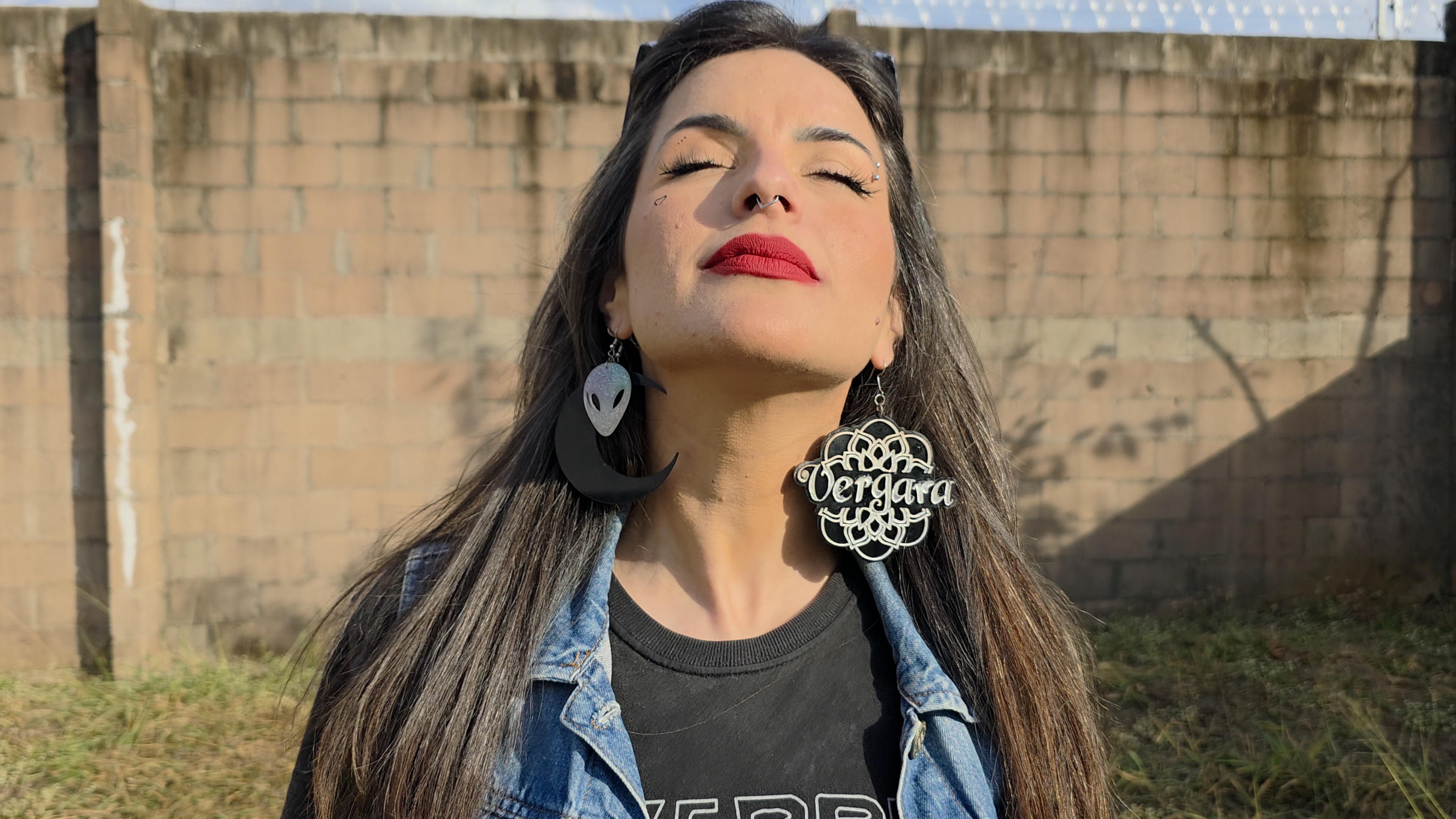
And I couldn't leave out a few moments that fill me with pride from these almost 10 years on the road. I brought my sound to television, appearing on SBT programs like NaTV Pode (covering São Carlos, Araraquara and the surrounding region) and the news program Noticidade, broadcast live from the SBT Central studios in Jaú — two appearances that, combined, reached regional coverage of more than 120 municipalities.
I shared the stage with giants of Brazilian rock: I opened for CPM 22 at the traditional Festa do Clima in São Carlos, and had the honor of representing women's strength in the Mulheres de Timbre project at São Carlos Clube, where I stood alongside incredible musicians opening for singer Pitty — of whom I've been an unapologetic fan since I was 14.
It's really special to remember that, in practically all of these events, I got to play “Das Seis,” my most-streamed and most significant released song. Beyond that, I've taken my original repertoire to several pocket shows at independent festivals, including two consecutive years at Sonora - Festival Internacional de Compositoras.